
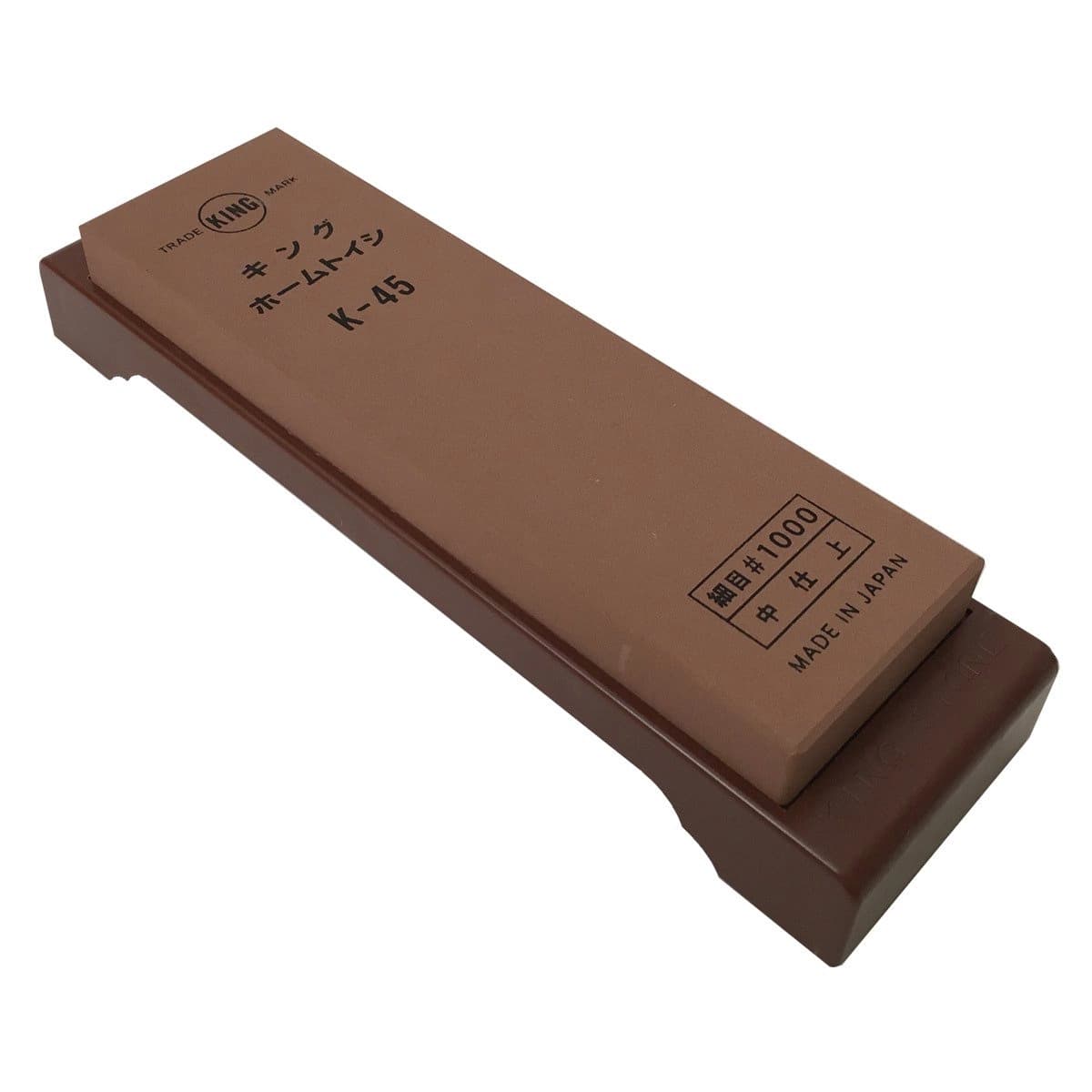
King K-45 water stone grit 1000 with base
SKU: 3706
Ceramic stone from the Japanese brand King. The special design allows for sharpening the best Japanese knives. The stone comes with a plastic stand. A top-quality stone.
Description
King K-45 Water Stone Grit 1000 with Base
Japanese King Deluxe K-45B Sharpening Stone with 1000 Grit
Sharpening stones are the best way to grind, sharpen, and polish a cutting edge. This method is also used by Japanese knife manufacturers.
King Deluxe K-45B 1000 sharpening stone is a flat, rectangular stone measuring 176x52x15 mm, with a grit (number of grains, abrasive particles per cm2) of 1000, which is the primary grit for sharpening knives. After sharpening on a 1000-grit stone, the cutting edge regains its proper working sharpness. The stone is placed on a plastic base with rubber, non-slip feet. The pure material used to produce these stones is aluminum trioxide Al2O3 (corundum).
King is a brand belonging to MATSUNAGA STONE CO., LTD, established in 1948, which specializes in the production of various types of abrasive materials, including stones for sharpening knives. The high quality of the products offered makes King stones recognized and highly valued worldwide.
Knife Sharpening:
- Grit Selection
- #220 - #600, when the knife is very dull or its cutting edge is damaged, chipped
- #800 - #1200 for regular sharpening, for slightly dull knives
- #1500 - #6000 for final smoothing and polishing
- Sharpening
1. Before use, soak the stone in water for a few minutes. The stone must remain wet at all times during sharpening.

2. Place the stone firmly on the countertop. You can place a damp cloth or paper towel under the stone to prevent it from moving. The knife should be placed against the stone at a 15-20 degree angle.

3. Depending on the blade type:
- single-bevel knife - sharpen 90% on one side and 10% on the other
- double-bevel knife - sharpen equally on both sides
4. After sharpening, remove the burr. To do this, set the knife perpendicular to the stone and, maintaining this angle, gently move it across the entire cutting edge, once to one side and then to the other side of the blade.

- Maintenance
After use, the stone should be thoroughly washed and dried. Over time, depressions may appear on the surface, so they need to be leveled, for example, using a special flattening stone.